Progress Isn’t Linear

Half a decade, 5 and a half years, 66 months, 289 weeks, 2, 022 days. No matter how I measure the length of time between my last post and today it seems unfathomable. So much has changed in my life and yet so many of the same struggles arise and that is not a surprise, not because I am incapable of lasting change, but rather because a straight line does not exist and therefore progress does not occur in a linear (straight) path either. 

A straight line is an abstract mathematical theory.  Look closely at the natural world around you and you will notice that texture, depth, movement, and imperfections exist everywhere, straight lines are an impossibility. Why then would we expect people to be able to achieve the impossible?

As we all move through life we move forward through time which, at least currently, is the only dimension that prohibits movement in any other way. Every other dimension is fluid and therefore like the oceans ebbs and flows, and changes its movement based on gravity, weather, climate, and other external forces. 

Our lives are complex and filled with external forces that impact our ability to move in a linear fashion. We have experiences that may push us forward and encourage us to make massive positive progress, or pull against us forcing us to exert ample effort to hold our ground and sometimes we are able to continue to move forward, while other times these forces cause us to back slide. Initially, these opposing forces appear to do nothing besides fight against us, however it is in the moments of adversity that we are able to hone our tools and skills to better be equipped for future challenges. While we are able to strengthen our response no amount of practice and positive progress will put an end to these trials.

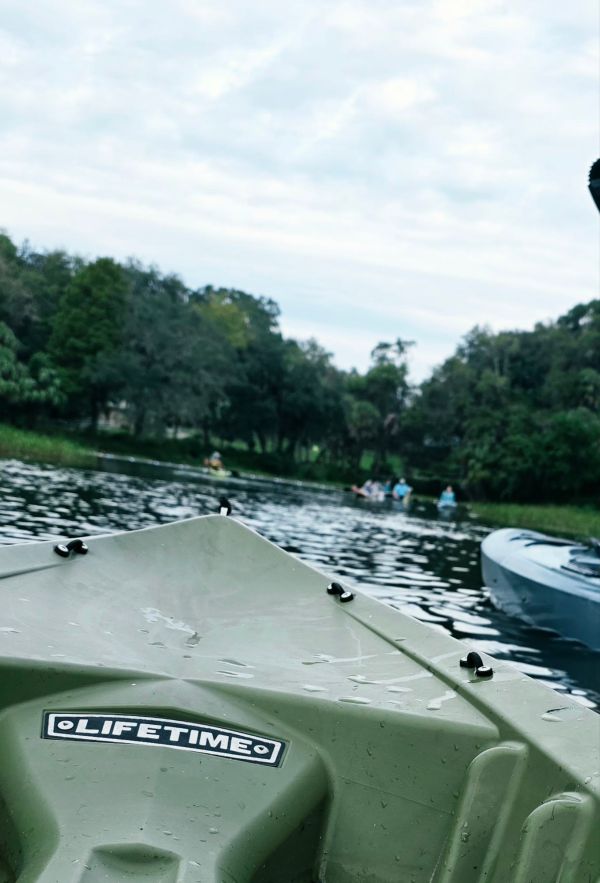
In the last 5 years my waters have provided me with monumental momentum to make some positive changes to factors that were in my control. I have also had to fight against some very strong currents to hold my ground and from time to time they are able to push against me and drag me back into old thought processes and mindsets. I am committed however to keep paddling against these currents. There may be days that I just go with the flow and drift in whatever direction the waters take me but I will continue to forgive myself for my imperfections and enjoy the journey as much as I can and I hope that you will do the same. 
Spoon Allowance: Understanding Life with Chronic Conditions

Depression, anxiety, lupus, and diabetes are a few examples of chronic illnesses. For those who do not live life with a chronic illness it can be incredibly difficult to understand what it’s like for those with these conditions on a daily basis. Typically when someone is asked to describe what it is like to have any given condition they talk about the medical symptoms but trying to explain the experience itself is a challenge. Christine Miserandino developed the most well-known theory to illustrate what it is like to live with a chronic illness. Her theory is known as spoon theory and gave birth to a community of ‘spoonies’ who connect through their shared experiences with chronic illness.  

So, let’s dive into spoon theory! We all understand that energy is a resource needed to do any task, however energy is not easily quantified. When Christine was asked late one night in a diner by her best friend to describe what living with lupus was like she looked around for anything she could use to demonstrate her experience. She quickly rounded up as many spoons as possible to use, twelve in total. She used each spoon to represent a unit of energy. She explained that most people have a seemingly infinite number of spoons but, those with chronic illness have a limited daily supply. She then walked her friend through a typical day, taking away spoons for each task. While a non-spoonie may think of getting ready in the morning as a singular task, in actuality it is comprised of several tasks- getting out of bed, showering, brushing your hair, putting on cloths, making breakfast, eating, etc. If not careful a spoonie can blow through their spoons in no time and be left without the energy to complete the day. As a result they must budget their resources each and every day and make informed decisions so that they do not end up in a situation that exacerbates things.  

This means that some spoonies frequently have to make sacrifices to make it through the day. This looks different for everyone, while one person may be able to skip a shower and put off their errands for a day others may end up needing to power down for a few days doing the minimum so that their spoons can be replenished. In time spoonies learn what their needs are and how hard they can push themselves. However, no matter how skilled they become at managing their spoons there are numerous factors that out of their control, catching a cold, getting stuck in traffic, or having to defend themselves to those around them.  

I am so grateful that Christine found a way to illustrate what spoonies, like me, experience. While some spoonies are open about what condition(s) they manage not all are, so it is important to respect their privacy. No one should have waste spoons on defending themselves and the reasons they function differently. I encourage all spoonies to take care of themselves first and surround themselves with a community of support and understanding. Also, remember to praise yourself for your accomplishments. What may seem like a small task to an outsider may be a large feat for you when working with limited spoons!  

Whether a spoonie or not, I invite you to subscribe to my site to learn more about mental health and wellness. 

Website Powered by WordPress.com.

Up ↑