What is Driving Your Behavior?

Regardless of my job title, there is one fundamental aspect that seems to be a through thread and that is understanding behavior. What is behavior exactly? Behavior is the observable and measurable things that an organism does, in this post we will be talking about people. Most behaviors that come to mind first are overt, or able to be easily observed by others, behaviors can also be covert and only easily observed by the individual doing them, such as thinking. Every behavior serves a purpose or function that can be linked back to our basic needs. 

In 1943, psychologist Abraham Maslow theorized a hierarchy of needs in his paper “A Theory of Human Motivation”. He presented these needs as a tiered system and hypothesized that in order for higher level needs to be addressed, lower level needs must first be fulfilled. The most basic of needs include our physiological needs such as air, nutrition, hydration, rest, temperature regulation and waste removal. These basic needs are required to maintain life in general but as we begin to move up the hierarchy the needs increase the quality of life. The next level addresses our safety needs; these include access to resources, shelter, control, structure, etc. Once we feel safe and secure we can focus on our social needs like a sense of belonging, community, connection, friendships, and intimacy. With connection and a sense of love and belonging we begin to develop our self-esteem and everything beyond that which includes growth and self-actualization. It was initially theorized that these needs had to be met at each level before progress at the next level could occur, however, as we have learned progress is not linear and multiple levels can be addressed simultaneously or even compete with each other.   

Behaviorists use the term function to describe the reason a behavior occurs so lets see how these needs fall into place with these functions. The four functions are access to resources, attention, escape, and sensory. When teaching animal trainers how behavior works many of them get stuck on access to resources and specifically nutrition. As we will be exploring, what drives our behavior is much more complex than just food, and we will start by unpacking what all access to resources includes. 

When discussing access to resources as a function of behavior we are talking about tangible items that move us toward fulfilling some of those basic needs including physiological needs (nutrition, hydration, thermoregulation), social needs (other individuals or groups), self-care (bathing, clean clothes, comfortable place to rest) and even growth (entertainment and learning). 

The next function we are going to explore is attention. Attention addresses the need for social connectedness and for people is most frequently desired from other people. Attention could be presented in various different ways, visual attention such as being observed or watched by others or interactions online, auditory attention like applause or cheering, and even social as in being included or sharing space. 

Both attention and access to resources could also fulfill a sensory function. When we talk about sensory we mean pleasure and pain. This can occur through any of the senses; things we hear, see, taste, smell, and or touch. 

The final function is escape. Escape can happen in opposition to any of the previous functions we discussed. Escape is when we are attempting to avoid something that we find aversive or to simply exert control.

When we understand these functions we are able to better analyze the reason(s) a behavior occurs and potentially identify ways in which we can modify our behavior. In the future I will be diving deeper into the science of behavior and attempting to make it accessible to anyone with an interest. My goal is not to teach you how to manipulate others but rather take control of yourself and work on modifying your own undesired behaviors or forming new positive habitats. I know that some of the science may be a dense read and if you have any questions or would like additional clarification feel free to leave a comment and I will work through it with you.

Holding onto Hope

Happiness and hopefulness are not synonymous. Over the last decade I have fought to maintain hope. There have been several points in my life where all hope was gone and I had given up. There are times when hoping for a specific outcome can be harmful and highly unlikely or even unrealistic, hoping your intimate partner will suddenly change and become less violent in an abusive relationship. At some point I will dive much deeper into the science of behavior and we will explore topics like abuse more then. However, hope is often what drives us to keep going. There are inevitabilities in life, such as death, however to quote the Connors, “The future is not set. There is no fate but what we make for ourselves.”

Having hope is different from being positive and allowing “fate” or “faith” to take control. Blind positivity without the drive to change the future is toxic. Everything isn’t wonderful. Humans are struggling to live safe quality lives, our planet is experiencing extreme changes, and we continue to practice blind toxic positivity. It will all work out, just have faith…

Hope however can drive action. I am disappointed, frustrated, disgusted, worried but hopeful. I believe that we may be losing battles but the war is not over. So how do we make our own fate? By fighting. There are so many ways in which we can continue to fight for a fate we design rather than succumb to whatever may occur if left unchecked.

When we think of those fighting wars, they are people who have agreed to give up everything for their cause, but don’t worry, you don’t have to give your comfort, safety or life to make gains. No one person can single handedly save the world, however, millions of people making small changes can have a huge impact.

The war you choose to battle right now might not even be world impacting yet. There have been times in my life when I had neglected my own needs to the point that I was fighting to stay alive. Some of the small changes that I had to commit to may have been as simple as getting out of my bed everyday, even if that just meant relocating to the couch. Once that became a habitat I could begin working on reconnecting with others or engaging my brain in something other than ruminating. Each little change built up to allow me to get back on my feet.

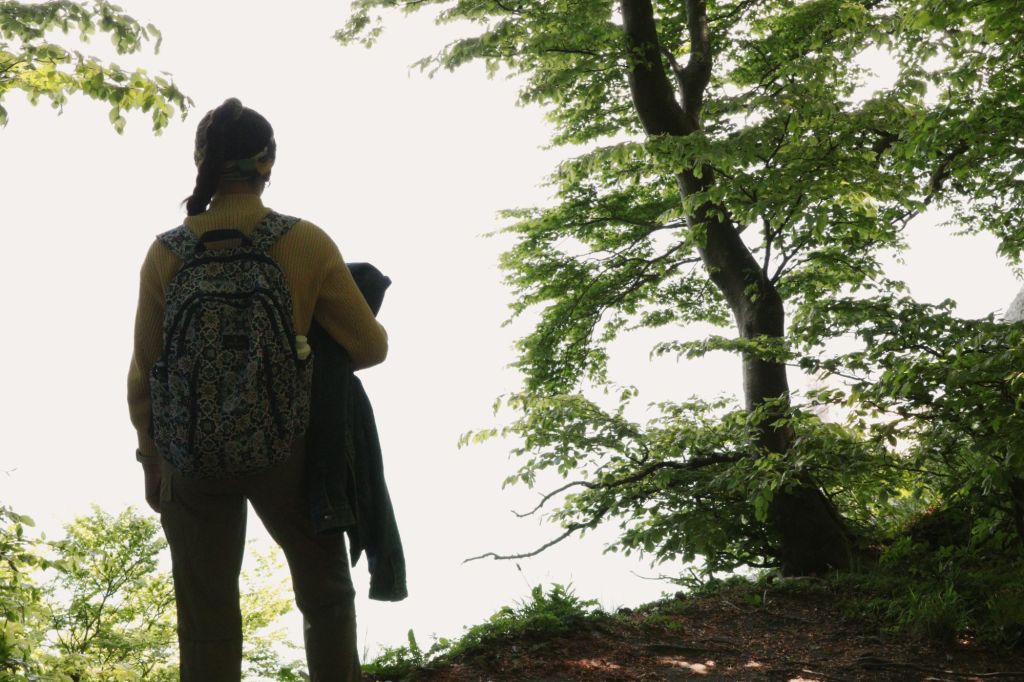
My current personal war is living MY life. I have spent most of my life taking care of others to the point of sacrificing my own wants and higher needs. Thus far I have done things I enjoy- reading more, dinner or drinks with friends, etc. However, there are many things that feed my passions that I have avoided because others feared for me doing them alone- getting out in my kayak, hiking, and exploring new places. While I would absolutely love to share these adventures with someone, I am going to start doing them for myself even if that means by myself, regardless. I am done forcing myself to be what others want from me and am going to live my life authentically and while doing this hopefully find my people along the way.

Measure Effort Not Outcome

This past year, 2020, was trying. No matter how together you had your life, in March our whole world changed. As we reflect on how the last year went, I want to share with you one of the most impactful things I learned.  

During my class on addiction counseling this past semester, I was assigned a chapter on counselor self-care. Self-care is incredibly important and I have read a ton on the topic, but in this chapter, something stuck out and stuck with me. It discussed how as counselors there is only so much that WE can do. We can provide our clients with all of the tools in the world, however, we are not in control of their recovery and we cannot take a relapse personally. How then do we measure ourselves as practitioners? The answer is we measure our effort, not our outcome!  

What does it mean to measure our effort, not our outcome? We have to understand that in every situation there are elements in which we lack some level of control. We must look, therefore, at those aspects where we do have control and the amount of work or effort we put in in those areas. We need to measure our performance rather than the product.  

I challenge you, as you reflect on 2020, to think about your performance rather than the outcomes or products as there were a lot of variables that added challenges.  

An example of this from my year would be my grades. I worked really hard to try and maintain all A’s this past year. Last semester, however, I failed got a B. At first, I was incredibly frustrated with myself. I should have worked harder, I should have studied more, etc. But when reflecting on my effort, instead of the outcome, I actually became really proud of myself. I selected this master’s program because of the in-person class style it offered and due to the pandemic we were completely remote now, which is a very challenging learning modality for me. I had also lost my part-time income over the summer, thanks to Covid related business closures. This resulted in me taking on a full-time contract, working overnights while taking four graduate-level courses to recover from the financial loss. I was also volunteering as a wellness counselor for the USF Confirmed Covid Counseling Clinic, and as a director for Owl’s Nest Sanctuary for Wildlife. If you look at the effort I put into growing as an individual and professional I had a very successful year, even though the product was not as I had hoped.  

I encourage you to reflect on your year and praise yourself, not for the outcomes you achieved, but for the effort you put forth. Depending on your circumstances your effort may not look like your usual effort. Majorly modifying your habits and adjusting to the new isolated, remote lifestyle was hard work and few people gave themselves credit for the effort they put into staying safe and healthy this past year. 

What effort are you proud of? Think about an area where you worked hard and deserve to give yourself some credit. Share your effort below so that we can practice praising each other and measuring our success by effort rather than the outcome. 

Privileged, Me?

As part of my commitment to learn more about how I can contribute to changing systemic discrimination and facilitating uncomfortable conversations I am currently reading So You Want To Talk About Race by Ijeoma Oluo. I am only four chapters in so far, but she has promised that I will make missteps along this journey, and that is okay. One of the frequent mistakes that is made in having conversations about systemic discrimination is forgetting to check your own privilege. Its hard to think of myself as privileged as I grew up in a text book broken home in a working class community with mental illness, but privilege comes in many different forms. Oluo discusses the many ways in which privileges present and encourages reflecting on ones own privileges. She also noted that some privileges may also come with disadvantages in certain ways but they still provide a certain benefit.

So here I go, publicly exploring and checking my own privileges and hoping you will, at least privately, do the same. If I am overlooking a privilege, which is possible, let me know!

I am white.
I am cisgendered.
I lean toward heterosexual norms.
I was able to complete high school.
I was able to afford to attend college and complete my degree.
I am a US born American.
I speak fluent English.
I am child-free.
I have supporting, loving, grandparents, mom, and brother.
I was able to attend preschool.
I am able bodied.
I am back in school working toward my masters degree.
I have stable housing.

I challenge you to comment with at least one way that you have privilege and I hope you will subscribe to my site and join me on this journey to a healthier community and improving mental wellness for all.

I am continuing to collect questions in order to facilitate an ongoing decision about race (Lets Talk About Race) but in the mean time will explore how I can better have these conversations. Next week I will share how we can use our privileges to help challenge systemic discrimination!

As an Amazon Associate I earn from qualifying purchases of the items linked in my post.

Website Powered by WordPress.com.

Up ↑