Blog

Sex- A Biological Factor

Let’s talk about sex! The anatomical kind not the act, but now that I have your attention why don’t we jump right in. 

Sex is a biological factor that is most often assigned at birth and accepted as fact. There is an assumption that whatever presents externally- penis or vulva- is congruent with the chromosomes a person has, their hormone functions, and their internal reproductive structures. You know what they say about assuming though. In a textbook world each human has 23 pairs of chromosomes with either 23 X and 23 Y chromosomes (male) or all 46 X chromosomes (female). However that is not always the case and even when it is, the body’s ability to produce and respond to hormones impact how it develops as well. There are also instances when during the development of the external organs (penis or vulva) is disrupted and ambiguous genitalia form. Often when this occurs doctors and parents decide on a sex to assign and surgery occurs to make the child appear more male or female. If a sex isn’t determined for the child they may receive the sex label of intersex.  

When there is an inconsistency between the chromosomes, hormones, external genitals, and internal structures it is known as a disorder of sex development. There are around 60 different conditions that are considered a disorder of sex development. While some of these conditions are easier to recognize at birth, others go unnoticed until puberty or fertility difficulties become evident, while some may go never discovered. 

There are biological and anatomical factors that are at work when determining sex however, the practice of labeling at birth is to better guide medical professionals as they monitor a child’s growth and screening for congenital conditions. The issue becomes that we assume sex determines gender and use this information to dictate how the child is to be raised and treated.   

The topics we are exploring with this series are complex and cannot be fleshed out in a single post. My hope is that through sharing this small piece of information regarding assigned sex it will help to start changing the way we think about and treat each other. For resources, references and to learn more click here. 
Sex, Gender, Sexuality

For some reason our world tries so hard to be dichotomous. We attempt to fit everything into two neat and opposing boxes, things are black or white. Our world however has millions of colors and very, very few things are black or white. When it comes to sex, gender, and sexuality things absolutely do not fit into two separate categories. Over the next few weeks we will be diving in to each of these three categories to understand the shades and hues within them. Before we can even dive in however, we need to understand what each one is individually as they are three different yet related things. 

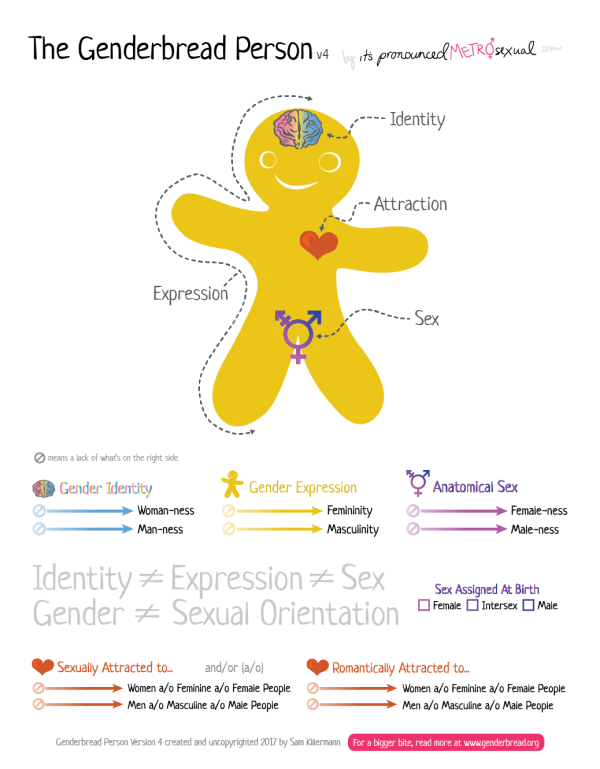
First let’s look at sex. You are most likely familiar with the male and female categories of sex, but they aren’t the only two. We aren’t going to get into all of this here, there will be an entire post dedicated to looking at the categories. For now what you need to understand is that sex is biological. It is determined by chromosomes. Remember X and Y from high school biology class? In theory you get one from each parent and if the cells follow directions well you end up with reproductive organs and external genitals that match your chromosomal make up. But guess what, high school biology was boiled down to the absolute simplest surface level content, it is so much more complex than this. Without turning this into an in-depth biology lesson, sex is assigned at birth. It is not assigned, generally, by looking at chromosomes, but instead by looking at external genitals. This means is a baby has something that looks more like a penis they are labeled as male. If the baby has something more closely resembling a vulva they are labeled as female. If there is uncertainty, depending on the state they may be assigned a sex of intersex or cosmetic surgery may be done and a sex of male or female assigned. 

Now, while sex is assigned as a result of genitals, which could (but don’t always) match chromosomes, gender is not. Again you probably associate the terms male and female, however think of them like the word orange. Orange labels both a fruit and a color but not all fruits that are orange are an orange and all oranges are not orange in color. Gender is how a person identifies in comparison to societal expectation and roles. There are a lot of factors that play into gender and the categories are not just black or white, man or woman. Gender becomes even more rich when gender expression is considered as a person can identify as one gender (or no gender, or multiple) but express themselves in ways that tend toward societal norms for another gender such as femininity for women and masculinity for men. 

As for sexuality, you have likely heard the saying “you can’t love someone until you love yourself”. This is a parallel to sexuality. Sexuality is about who you love, but in order to label it you must first know yourself and your gender. Sexuality has been a hot topic for as long as I can remember. I will tell you right now I am NOT talking about sexual preference as a preference implies a choice- I prefer steak to salad but crave both regularly. Sexuality describes who we are attracted to in an intimate sexual way and is not driven by nurture or choice. Sometimes inner barriers keep people from accepting their sexuality from an early age and they do not “come out” until later in life. This does not mean that they decided to change their sexuality but rather they have learned to live more authentically. Sexuality cannot be changed, it is not a choice! 

Discussing these terms and how we (feel the need to) label people can be incredibly uncomfortable, but it is a discussion that needs to be had frequently and repeatedly. I really hope that you stick with me in the next few weeks to learn more about sex, gender, and sexuality and then use this information to have these uncomfortable conversations. The more we talk the more comfortable the conversation will become and the only way to make the change needed in this world is by advocating and educating and I hope you will help me with that. 

Measure Effort Not Outcome

This past year, 2020, was trying. No matter how together you had your life, in March our whole world changed. As we reflect on how the last year went, I want to share with you one of the most impactful things I learned.  

During my class on addiction counseling this past semester, I was assigned a chapter on counselor self-care. Self-care is incredibly important and I have read a ton on the topic, but in this chapter, something stuck out and stuck with me. It discussed how as counselors there is only so much that WE can do. We can provide our clients with all of the tools in the world, however, we are not in control of their recovery and we cannot take a relapse personally. How then do we measure ourselves as practitioners? The answer is we measure our effort, not our outcome!  

What does it mean to measure our effort, not our outcome? We have to understand that in every situation there are elements in which we lack some level of control. We must look, therefore, at those aspects where we do have control and the amount of work or effort we put in in those areas. We need to measure our performance rather than the product.  

I challenge you, as you reflect on 2020, to think about your performance rather than the outcomes or products as there were a lot of variables that added challenges.  

An example of this from my year would be my grades. I worked really hard to try and maintain all A’s this past year. Last semester, however, I failed got a B. At first, I was incredibly frustrated with myself. I should have worked harder, I should have studied more, etc. But when reflecting on my effort, instead of the outcome, I actually became really proud of myself. I selected this master’s program because of the in-person class style it offered and due to the pandemic we were completely remote now, which is a very challenging learning modality for me. I had also lost my part-time income over the summer, thanks to Covid related business closures. This resulted in me taking on a full-time contract, working overnights while taking four graduate-level courses to recover from the financial loss. I was also volunteering as a wellness counselor for the USF Confirmed Covid Counseling Clinic, and as a director for Owl’s Nest Sanctuary for Wildlife. If you look at the effort I put into growing as an individual and professional I had a very successful year, even though the product was not as I had hoped.  

I encourage you to reflect on your year and praise yourself, not for the outcomes you achieved, but for the effort you put forth. Depending on your circumstances your effort may not look like your usual effort. Majorly modifying your habits and adjusting to the new isolated, remote lifestyle was hard work and few people gave themselves credit for the effort they put into staying safe and healthy this past year. 

What effort are you proud of? Think about an area where you worked hard and deserve to give yourself some credit. Share your effort below so that we can practice praising each other and measuring our success by effort rather than the outcome. 

The Power of Words- Layers of Meaning

“You are overthinking what was said.” If you have heard that line, you are not alone. We’ve all heard “a picture paints a thousand words” and that “actions speak louder then words”. I cringe at how much these sayings discount the power of words.

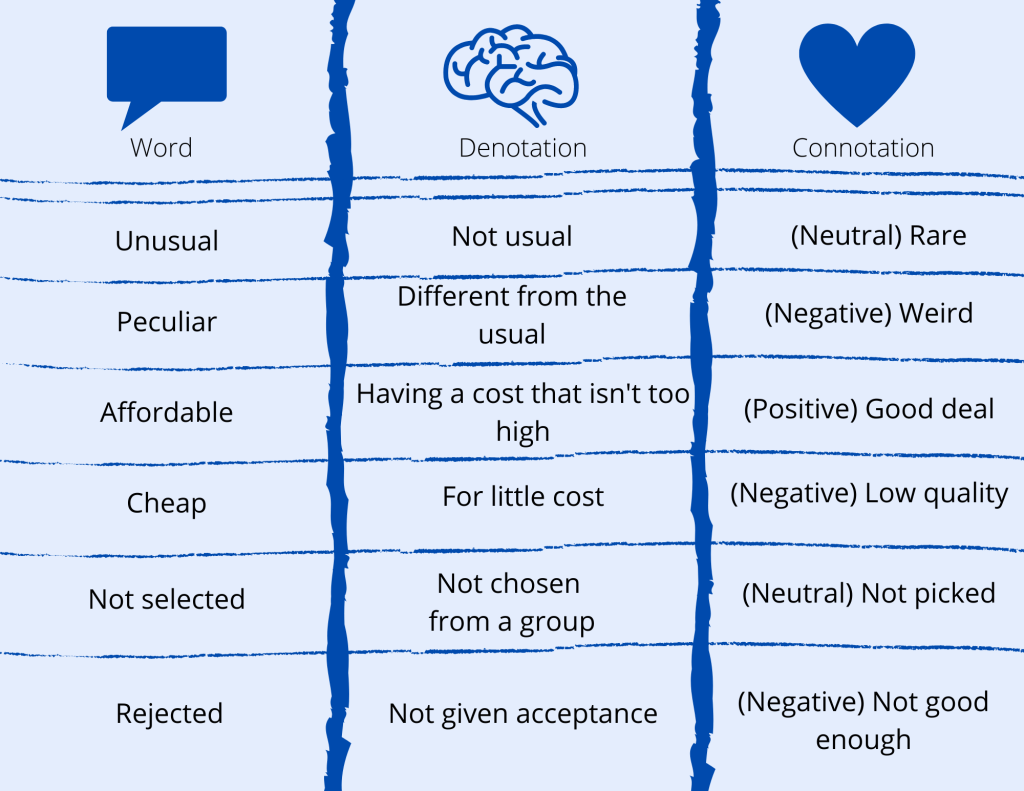
We often forget that words carry layers of meaning through denotation, or the literal meaning, and connotation, the deeper meaning linked to our thoughts and feelings surrounding the word. Denotation is the meaning that would be found in the dictionary, think of it as the meaning your “brain” interprets. Connotation however, is what your “heart” or “gut” feels and is the key element in “overthinking what was said”. Connotation can elicit positive, negative, and even neutral feelings.

All definitions (denotations) from Merriam-Webster.com

Add to the meanings presented with the words along with the tone in which they are said (by the sender) or read (by the receiver in written messages) and the meaning can become even richer.

Overthinking can occur for a variety of reasons but it tends to be “A NIT”.

*Automatic- seems to just happen unintentionally
*Negative- generally evoke undesirable feelings
*Intrusive- aren’t easily dismissed
*Thoughts- tend to be based on ideas which trigger emotions

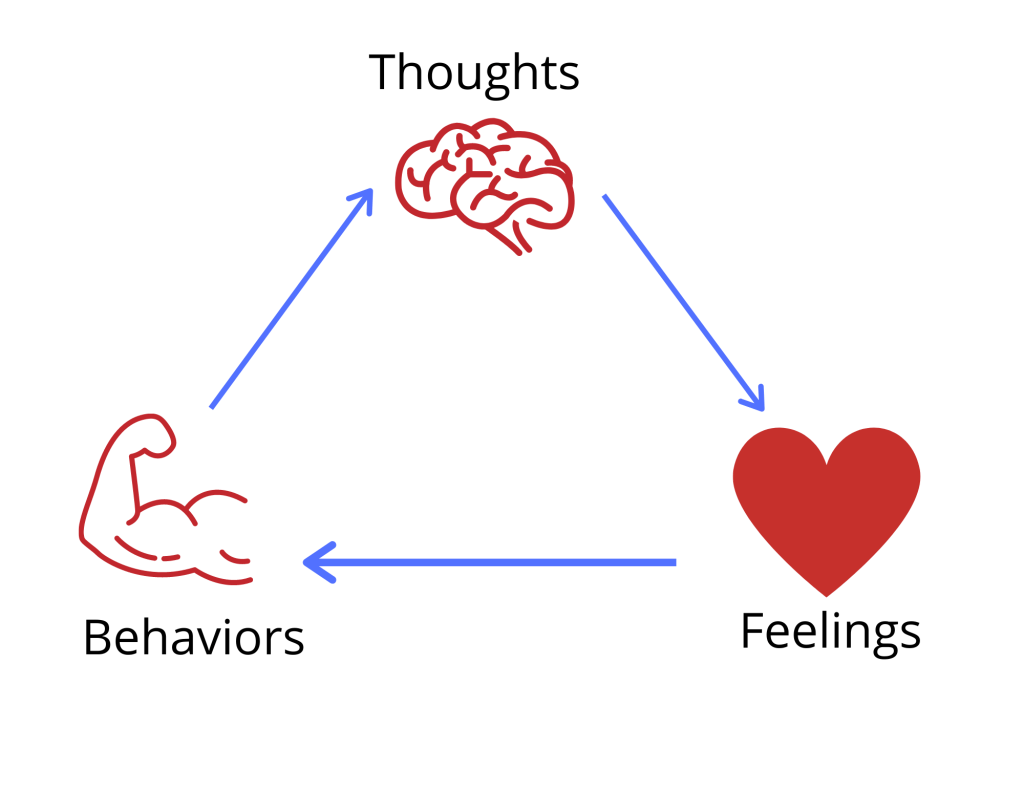
Since their thoughts tend to evoke emotions there is a risk that they will influence our behaviors if not kept in check often leading to self-fulfilling or self-sabotaging which reinforces the thought. There are several therapeutic tools and techniques that help address and disrupt this viscous cycle.

In time, I will write individual posts for some of these tools and techniques, however, I strongly recommend working with a licensed professional to learn them.

As we are all senders of messages however, I want you to reflect on they ways in which you say things. If you find that people misread what you say, think about the words you choose and the emotions they may carry with them.

Words are powerful and you have a choice to use them beneficially to have clear communication or haphazardly and risk miscommunications and potentially distress.

PTSD, What is it?

I was recently told, by a journalist, with no credentials related to mental health, that I have PTSD. He had mistakenly and ignorantly diagnosed me based on his lay men knowledge. He assumed that because I have experienced trauma and deal with depression and anxiety that I MUST have PTSD. As I tried to explain to him the differences in diagnoses I realized that too often mental health condition terms get used incorrectly and so casually that some people think they understand, but they don’t.

I could, and will, write an entire post on the how language impacts the stigma related to mental health, but right now I am just going to focus on educating about what PTSD really is.

PTSD, or Post-Traumatic Stress Disorder, is a condition that can be diagnosed at any age and it is listed under Trauma- and Stressor- related disorders in the Diagnostic and Statistical Manual of Mental Disorders, 5th Edition (DSM-5). While it can be diagnosed in children under 6, I am going to focus on how it manifests in those 6 years and older (including adults). I urge you to seek professional help if you or someone you know is struggling with mental health and want you to understand the purpose of this post is general education and awareness and should NOT be used to make assumptions about diagnosis.

This first criteria that must be met is experiencing a traumatic event that involves death, potential death, severe injury, or violence. This can be an event that happens directly to the person, was witnessed by the person, or occurs vicariously.

While I have met this criteria it does not mean that I will automatically develop PTSD.

The next criteria is that the individual has intrusive symptoms related to the event. This means they may repeatedly have undesirable memories of the event, flashbacks (moments in which they feel as if the event is occurring again/still), or distress triggered by a symbolic cue linked to the event (this distress could be mental or physical). There must also be continued attempts to avoid triggers and or intrusive symptoms.

The next criteria is negative changes in the way the person thinks or their feelings. Some of the ways this is seen is through self-blaming for the event, inability to remember details from the event, constant negative feelings, lack of desire to do things or inability or difficulty with relationships.

The final criteria is considerable changes in behavior around the event. This may look like becoming aggressive, self-harming, participating in risky behaviors, hypervigilance, easily startled, difficulty concentrating, and or troubles related to sleep.

Now it is important to understand that this is not a short-term experience. Acute Stress Disorder is a similar, but brief condition (that I have experienced first hand). PTSD is persistent, lasting more than a month, and significantly impacts the persons ability to function in important areas of life such as socially.

The other thing to remember is that each individual with PTSD is an individual and their experiences will vary. It presents differently in my friend with medical trauma then my friend who is a domestic violence survivor and her differently then my friend who survived a sexual assault, and she differs from my first responder friends, and each veteran friend experiences it differently too.

Those with PTSD can benefit from several different sources of support including counseling. I cannot encourage you enough- if you are effected by PTSD, seek support. Help seeking is courageous, not cowardly and no one should be battling alone.

Website Powered by WordPress.com.

Up ↑