People Pleaser Problem

Why did I stop writing? Why did I ever start? 

I started therapy when I was just 6 years old. I don’t remember a ton about the modality or any positive changes that came from that first therapist. I do recall her explaining to me that I could trust her, that she would keep my secrets and help me. And then I remember the backlash and broken trust. She had been subpoenaed to court as a witness in the incredibly vicious custody battle that was just beginning to sink its vindictive claws into my little life. “Family” at the time in history was presented as this happy unit of people who loved each other unconditionally, who stuck together through thick and thin, defended each other and were permanent. I had never heard of a chosen family, had no examples of what divorce was or could look like. I was alone in uncharted territory. 

Divorce at that time was still so taboo that even other authoritative adults in my life weren’t sure how to respond. In school I was pulled from my class weekly by the guidance counselor to monitor how I was coping I guess. I can tell you not well, I recently found one of my notebooks from 1993, when I was 7 years old, and my “art” is disturbing. Why have I held onto it? I guess it is a reminder of who I am and how far I have come. The adults at school weren’t the only ones unsure of how to handle the situation, I was excluded from extra-curricular activities at church. They couldn’t stop me from attending but they could and they did prohibit me from being an active participant in both the youth group and youth choir, isolating me from my peers. 

Other kids didn’t know how to act either. I was taxied back and forth, weekly, between two houses more than 7 miles apart, in two different zip codes, two different school zones, too far to walk or bike between. My father rarely allowed me to go anywhere I was invited during “his time” and very quickly the invitations just stopped altogether. I was again isolated. 

His time was so valuable because that is when he had full control. The ability to say what he wanted without witness, the only reason I can think of even now was to utilize me as a pawn in his war against my mom. To this day I can not fathom how such hate exists. There are people who make me shudder, who cause a visceral reaction, and even people that strike such fear into me that I flee and yet, I can’t find the capacity to hate. I don’t even hate him, even after he erased me from his family tree. 

I sometimes wish that as easily as he omitted me from his records that I could do the same. Undo the neural pathways he laid ever so carefully. Untangle my twisted automatic thinking. However, it is not possible to erase such trauma and now most days I would not give up my past, it has shaped not only my struggles but also informed my victories.

I have however spent years, decades really, trying to learn how to undo the damage and retrain my brain. I have lost count of how many professionals I have seen. Some only once as they did not inspire a sense of safety in me. Others I saw for months or years at a time. The most impactful moment came in 2018 when my psychologist at the time, Dr. Martin Cohen, told me to “stop being so damned selfless”. I immediately began to pile on my self-deprecation and cite how he was right, my father was right, I was selfish and worthless. Selfish for never giving enough, being enough, for anyone, absolutely worthless. Dr. Cohen would not stand down. He immediately met me with a counter argument. As a way to try and overcome the isolation I dealt with for oh so many years I had become a persistent people pleaser. I did whatever everyone else expected from me, pushed down anything I wanted if it didn’t align to what others around me desired. I had given up me, who I really was, my actual authentic self to try and build connectedness, a sense of love and belonging. The problem was no one, not even me, knew me. This person that was trying so hard to not to stay alone, not die alone like she had been told she would so many times, wasn’t actually me. I was still alone and felt that loneliness to my core. 

That realization is what started me on a new journey. I started graduate school and sought out to discover who I was and what I wanted for the first time in a very, very long time. In graduate school I met many people who had demons similar to mine and so I started writing. 

My writing was a form of self discovery, catharsis, and an outstretched hand to anyone else fighting to not just stay alive, but live a life worth living, a meaningful and connected life. I wanted everyone else like me to know that they belong, WE belong and are worthy of connection, love and happiness. 

So why stop? Once again I had forgotten about me. No one was taking my hand and I had fallen into the old habitats of people pleasing and measuring my worth based on the acceptance of others. I forgot why the journey began in the first place. Here I am though, sitting surrounded by people and yet feeling alone, on the beach, watching a pair of dolphins play as the sunsets and crying as I recommit myself to me, rejection be damned. As a coworker recently told me, if people don’t stand by me in the rain, they don’t deserve me when the sun shines either. 

I may not have many friends but I do have a few really great people who love me, real me, actual authentic raw, rainy days included me.  And I am going to try to accept rejection with more grace. Rejection does not reflect on me but so many things and I am going to try to embrace those awkward moments when I reach out to try and build connections and community yet my hand stays empty or gets pushed away. Those people who get to know me and still love me mean so much more than all of the forced false friendships in the world.

Measure Effort Not Outcome

This past year, 2020, was trying. No matter how together you had your life, in March our whole world changed. As we reflect on how the last year went, I want to share with you one of the most impactful things I learned.  

During my class on addiction counseling this past semester, I was assigned a chapter on counselor self-care. Self-care is incredibly important and I have read a ton on the topic, but in this chapter, something stuck out and stuck with me. It discussed how as counselors there is only so much that WE can do. We can provide our clients with all of the tools in the world, however, we are not in control of their recovery and we cannot take a relapse personally. How then do we measure ourselves as practitioners? The answer is we measure our effort, not our outcome!  

What does it mean to measure our effort, not our outcome? We have to understand that in every situation there are elements in which we lack some level of control. We must look, therefore, at those aspects where we do have control and the amount of work or effort we put in in those areas. We need to measure our performance rather than the product.  

I challenge you, as you reflect on 2020, to think about your performance rather than the outcomes or products as there were a lot of variables that added challenges.  

An example of this from my year would be my grades. I worked really hard to try and maintain all A’s this past year. Last semester, however, I failed got a B. At first, I was incredibly frustrated with myself. I should have worked harder, I should have studied more, etc. But when reflecting on my effort, instead of the outcome, I actually became really proud of myself. I selected this master’s program because of the in-person class style it offered and due to the pandemic we were completely remote now, which is a very challenging learning modality for me. I had also lost my part-time income over the summer, thanks to Covid related business closures. This resulted in me taking on a full-time contract, working overnights while taking four graduate-level courses to recover from the financial loss. I was also volunteering as a wellness counselor for the USF Confirmed Covid Counseling Clinic, and as a director for Owl’s Nest Sanctuary for Wildlife. If you look at the effort I put into growing as an individual and professional I had a very successful year, even though the product was not as I had hoped.  

I encourage you to reflect on your year and praise yourself, not for the outcomes you achieved, but for the effort you put forth. Depending on your circumstances your effort may not look like your usual effort. Majorly modifying your habits and adjusting to the new isolated, remote lifestyle was hard work and few people gave themselves credit for the effort they put into staying safe and healthy this past year. 

What effort are you proud of? Think about an area where you worked hard and deserve to give yourself some credit. Share your effort below so that we can practice praising each other and measuring our success by effort rather than the outcome. 

The Power of Words- Layers of Meaning

“You are overthinking what was said.” If you have heard that line, you are not alone. We’ve all heard “a picture paints a thousand words” and that “actions speak louder then words”. I cringe at how much these sayings discount the power of words.

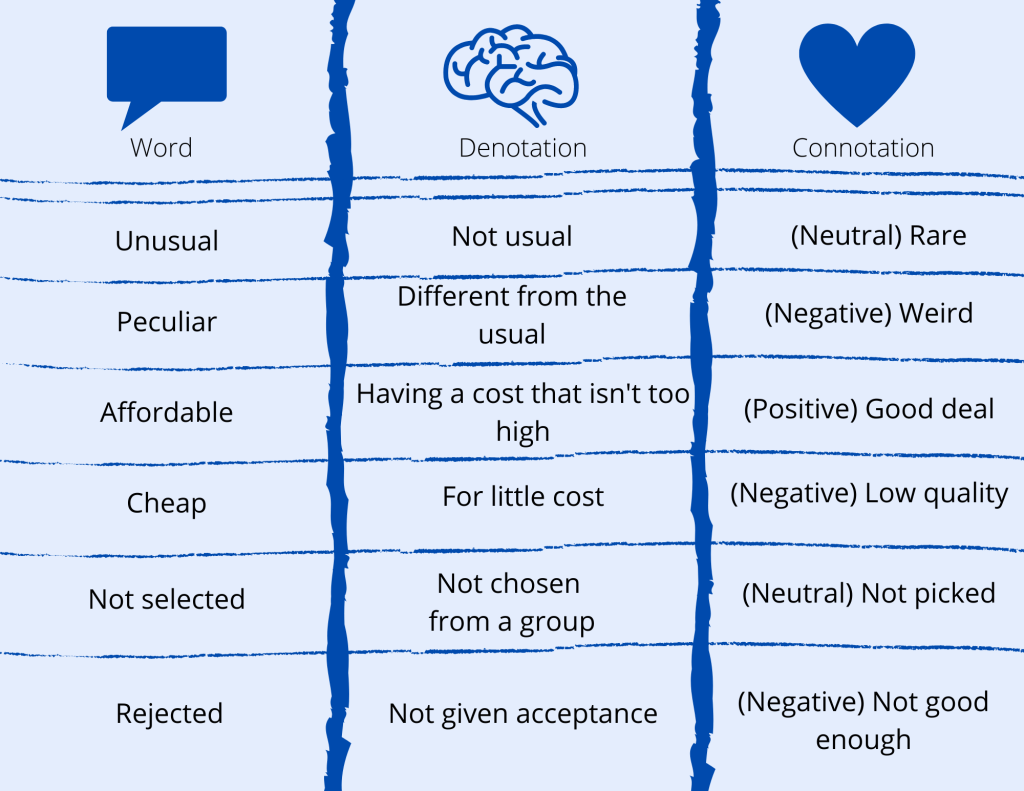
We often forget that words carry layers of meaning through denotation, or the literal meaning, and connotation, the deeper meaning linked to our thoughts and feelings surrounding the word. Denotation is the meaning that would be found in the dictionary, think of it as the meaning your “brain” interprets. Connotation however, is what your “heart” or “gut” feels and is the key element in “overthinking what was said”. Connotation can elicit positive, negative, and even neutral feelings.

All definitions (denotations) from Merriam-Webster.com

Add to the meanings presented with the words along with the tone in which they are said (by the sender) or read (by the receiver in written messages) and the meaning can become even richer.

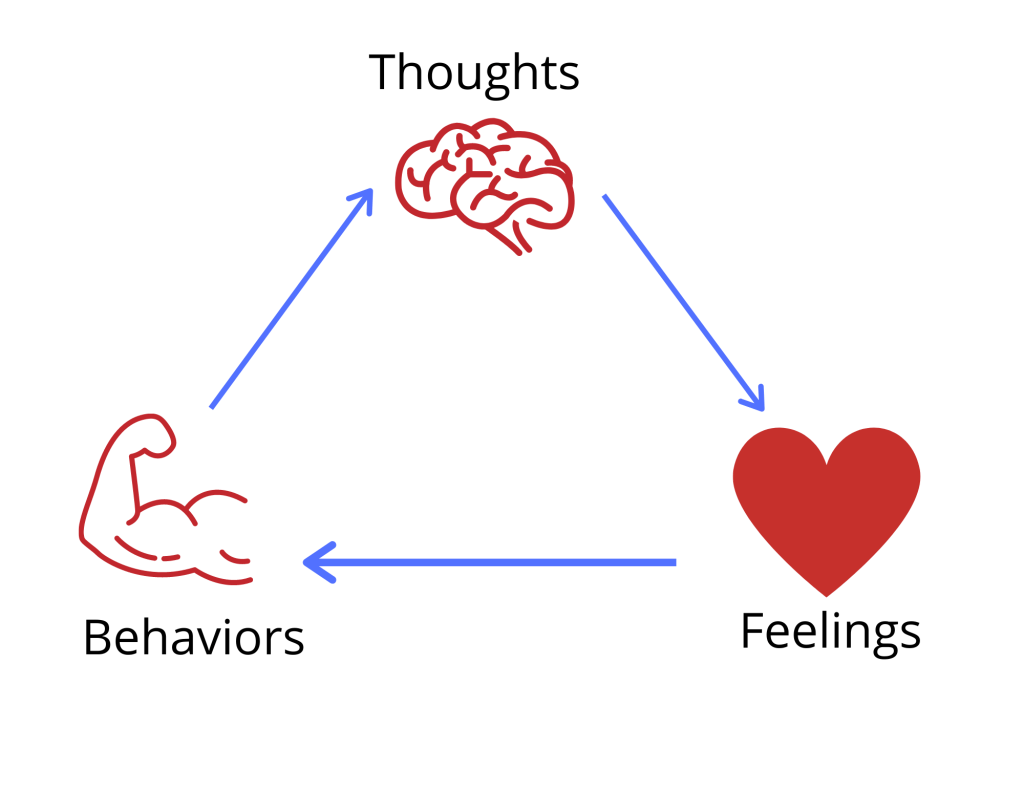
Overthinking can occur for a variety of reasons but it tends to be “A NIT”.

*Automatic- seems to just happen unintentionally
*Negative- generally evoke undesirable feelings
*Intrusive- aren’t easily dismissed
*Thoughts- tend to be based on ideas which trigger emotions

Since their thoughts tend to evoke emotions there is a risk that they will influence our behaviors if not kept in check often leading to self-fulfilling or self-sabotaging which reinforces the thought. There are several therapeutic tools and techniques that help address and disrupt this viscous cycle.

In time, I will write individual posts for some of these tools and techniques, however, I strongly recommend working with a licensed professional to learn them.

As we are all senders of messages however, I want you to reflect on they ways in which you say things. If you find that people misread what you say, think about the words you choose and the emotions they may carry with them.

Words are powerful and you have a choice to use them beneficially to have clear communication or haphazardly and risk miscommunications and potentially distress.

The Imposter Inside

Have you ever felt like you were a fraud? Perhaps you questioned your own knowledge in your field or position. Maybe you were anxious that someone would discover that you were just “faking it until you make it.” These are all signs of a phenomenon known as IMPOSTER SYNDROME and you are not alone.

This year has been particularly tough for most people as everyone’s lives changed drastically with the pandemic. This has caused even more people to look critically at themselves. Recently, I myself became nearly paralyzed by imposter syndrome. I started a new, temporary, job in the technical theatre industry, which I haven’t worked in in almost 10 years, launched the internship program at Owl’s Nest Sanctuary for Wildlife, and continued on my own professional development journey as a graduate student. Up until now, I had felt rather comfortable, confident even, in my decision to leave my career as a classroom teacher to purse my Big Audacious Goal of opening an ecotherapy center. Suddenly, however, I felt like I must have flown under the radar to get accepted into my graduate program and that I had made it this far by a streak of good luck. I was terrified that any day now my luck would run out and someone would realize that they had made a mistake and I would be busted as an imposter!

So why on earth would I turn around and out myself like this?

Last week I had a conversation with some of my peers, turns out this feeling is pretty universal and most people experience it at some point. Through talking about my feelings I was able to process what was going on deeper within and gained a better understanding as to why this common condition was flaring up so viscously for me.

For many years I had a deeply rooted belief that I was worthless, useless, and undeserving. It wasn’t until the last few years that I was able to start to breakdown these beliefs by reframing my thinking (I will do a post in the future explaining what that means). I spent the majority of my life discounting myself and my achievements because I didn’t feel or think I was worthy of success and recognition. This affected me to the point that if you thanked me for something as simple as setting up the desks for class, I would reject your appreciation and tell you why I did it for self-serving reasons. As a result of this constant self-depreciation, I have a skewed view of my qualifications and abilities but I am working on changing that. I realized that I have spent my whole life trying to prove my worth and not spent enough time reflecting on the value of everything I have done, accomplished.

Yes, I could continue to discount myself by measuring myself against everything I haven’t done, but there will always be more to do and no one is a master of all things. I am choosing to focus on what I have done rather then what I haven’t. As for the “streak of good luck”, Seneca said, “Luck is what happens when preparation meets opportunity”. This means that if I hadn’t put in the work upfront I wouldn’t be able to seize the opportunities I have when they present.

The only imposter is the voice inside telling me I am not worthy and its time that voice shuts up. I’m making a commitment to myself to spend time each week reflecting on something I have accomplished and recognizing myself for the hard work I did to do it. Sometimes these accomplishments may be small but I will write them each down and when the imposter inside begins to creep back up I will have a quick reference of the evidence proving to myself that I am not a fraud, I am a badass!

What is something you have accomplished that you should give yourself more credit for? Comment below and let’s practice some praise with each other!

As an Amazon Associate I earn from qualifying purchases of the items linked in my post.

Spoon Allowance: Understanding Life with Chronic Conditions

Depression, anxiety, lupus, and diabetes are a few examples of chronic illnesses. For those who do not live life with a chronic illness it can be incredibly difficult to understand what it’s like for those with these conditions on a daily basis. Typically when someone is asked to describe what it is like to have any given condition they talk about the medical symptoms but trying to explain the experience itself is a challenge. Christine Miserandino developed the most well-known theory to illustrate what it is like to live with a chronic illness. Her theory is known as spoon theory and gave birth to a community of ‘spoonies’ who connect through their shared experiences with chronic illness.  

So, let’s dive into spoon theory! We all understand that energy is a resource needed to do any task, however energy is not easily quantified. When Christine was asked late one night in a diner by her best friend to describe what living with lupus was like she looked around for anything she could use to demonstrate her experience. She quickly rounded up as many spoons as possible to use, twelve in total. She used each spoon to represent a unit of energy. She explained that most people have a seemingly infinite number of spoons but, those with chronic illness have a limited daily supply. She then walked her friend through a typical day, taking away spoons for each task. While a non-spoonie may think of getting ready in the morning as a singular task, in actuality it is comprised of several tasks- getting out of bed, showering, brushing your hair, putting on cloths, making breakfast, eating, etc. If not careful a spoonie can blow through their spoons in no time and be left without the energy to complete the day. As a result they must budget their resources each and every day and make informed decisions so that they do not end up in a situation that exacerbates things.  

This means that some spoonies frequently have to make sacrifices to make it through the day. This looks different for everyone, while one person may be able to skip a shower and put off their errands for a day others may end up needing to power down for a few days doing the minimum so that their spoons can be replenished. In time spoonies learn what their needs are and how hard they can push themselves. However, no matter how skilled they become at managing their spoons there are numerous factors that out of their control, catching a cold, getting stuck in traffic, or having to defend themselves to those around them.  

I am so grateful that Christine found a way to illustrate what spoonies, like me, experience. While some spoonies are open about what condition(s) they manage not all are, so it is important to respect their privacy. No one should have waste spoons on defending themselves and the reasons they function differently. I encourage all spoonies to take care of themselves first and surround themselves with a community of support and understanding. Also, remember to praise yourself for your accomplishments. What may seem like a small task to an outsider may be a large feat for you when working with limited spoons!  

Whether a spoonie or not, I invite you to subscribe to my site to learn more about mental health and wellness. 

Website Powered by WordPress.com.

Up ↑